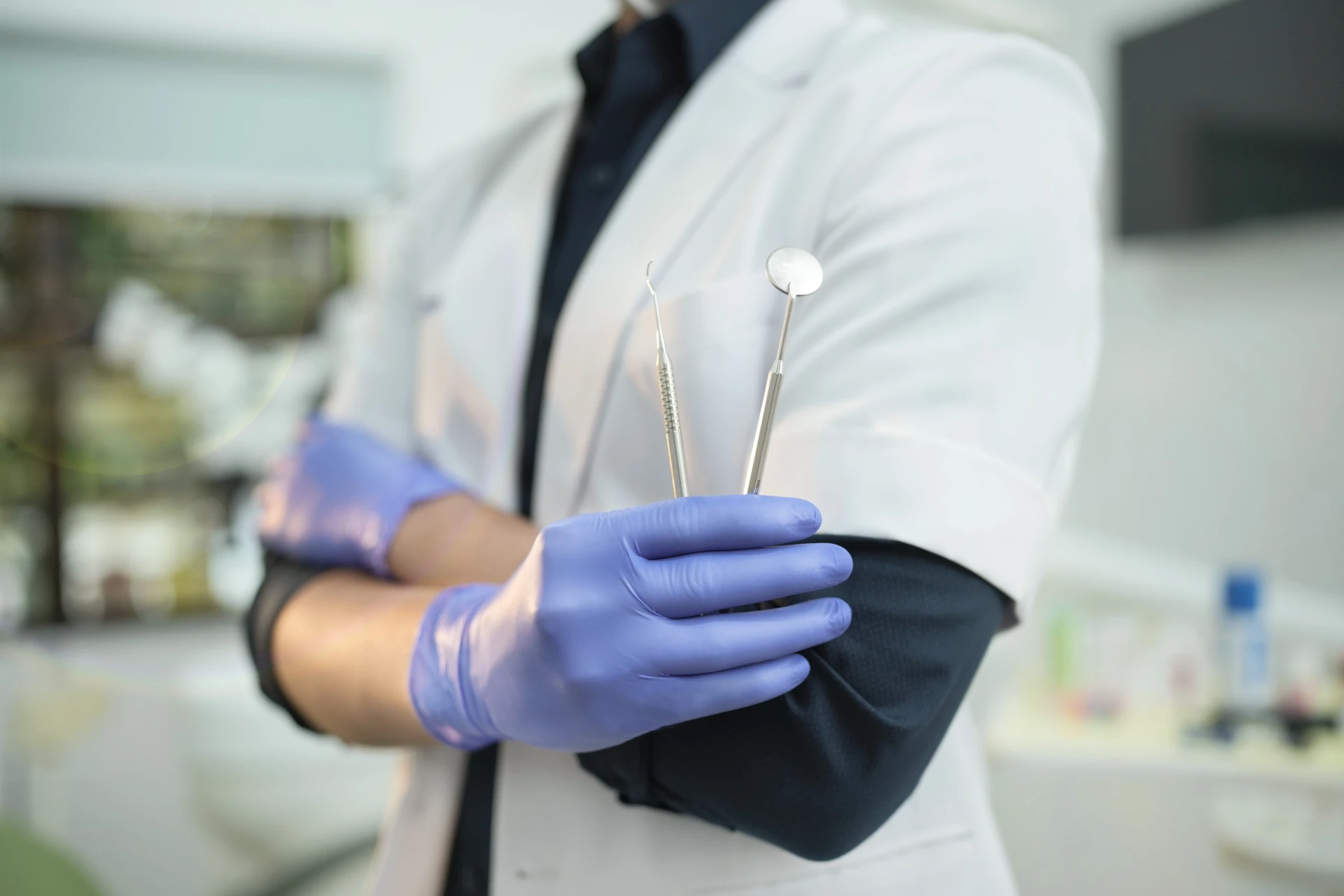
In the process of dental education, laboratory practice is a crucial stage before students face real patients. The skills laboratory requires students to perform preparations, fillings, and understand tactile sensations that resemble real-life conditions. The training medium used is artificial tooth models.
Unfortunately, the tooth models available on the market still have many limitations. Generally made of polyester resin or general-purpose resin, these products tend to be softer than natural teeth. As a result, students cannot gain a realistic training experience. Furthermore, research has shown that resin has the potential to release chemical compounds such as Tinuvin 292, which can pollute the environment.
From an economic standpoint, the issue is equally challenging. The price of a single resin tooth model reaches approximately Rp40,000, while one practice scenario requires about 10 pieces. Multiplied by the number of cases to be completed, the cost becomes quite burdensome.
Arising from these problems, a group of students took the initiative to find a solution that is not only economical but also environmentally friendly. The result was the creation of a product called Polyshell Dent, an alternative tooth model made from polypropylene (PP) plastic waste from single-use food containers and calcium carbonate from blood clam shells (Anadara granosa).
PP plastic was chosen for its lightweight, smooth, and chemical-resistant properties. When combined with calcium carbonate powder, the material becomes stronger and more rigid. Thus, the resulting tooth model more closely resembles the condition of human teeth.
Indonesia is still facing a serious waste problem. The Ministry of Environment and Forestry (KLHK) recorded that in 2022, national waste reached 68.5 million tons, of which 18.7% was plastic. PP plastic is one of the major contributors as it is commonly used for food containers and single-use packaging.
On the other hand, the fisheries sector also generates large amounts of waste. Blood clam shells, rich in calcium carbonate, mostly end up in disposal sites. In fact, research shows their calcium carbonate content reaches 98%, making them highly potential as a filler material in polymers.
Polyshell Dent emerges as the answer. By utilizing both types of waste, students not only produce an educational product but also contribute to reducing plastic and marine waste.
This product has several advantages compared to factory-made resin tooth models, including:
More Realistic Sensation
The addition of calcium carbonate increases the hardness of PP plastic, making it closer to natural teeth. Students can experience more realistic practice sessions.
Environmentally Friendly
Research has proven that Polyshell Dent can degrade in soil within approximately 25 days, significantly faster than resin, which is notoriously difficult to decompose.
Lower Cost
Since the raw materials are waste-based, production costs are reduced. Students can save expenses without sacrificing training quality.
-
Waste Management Solution
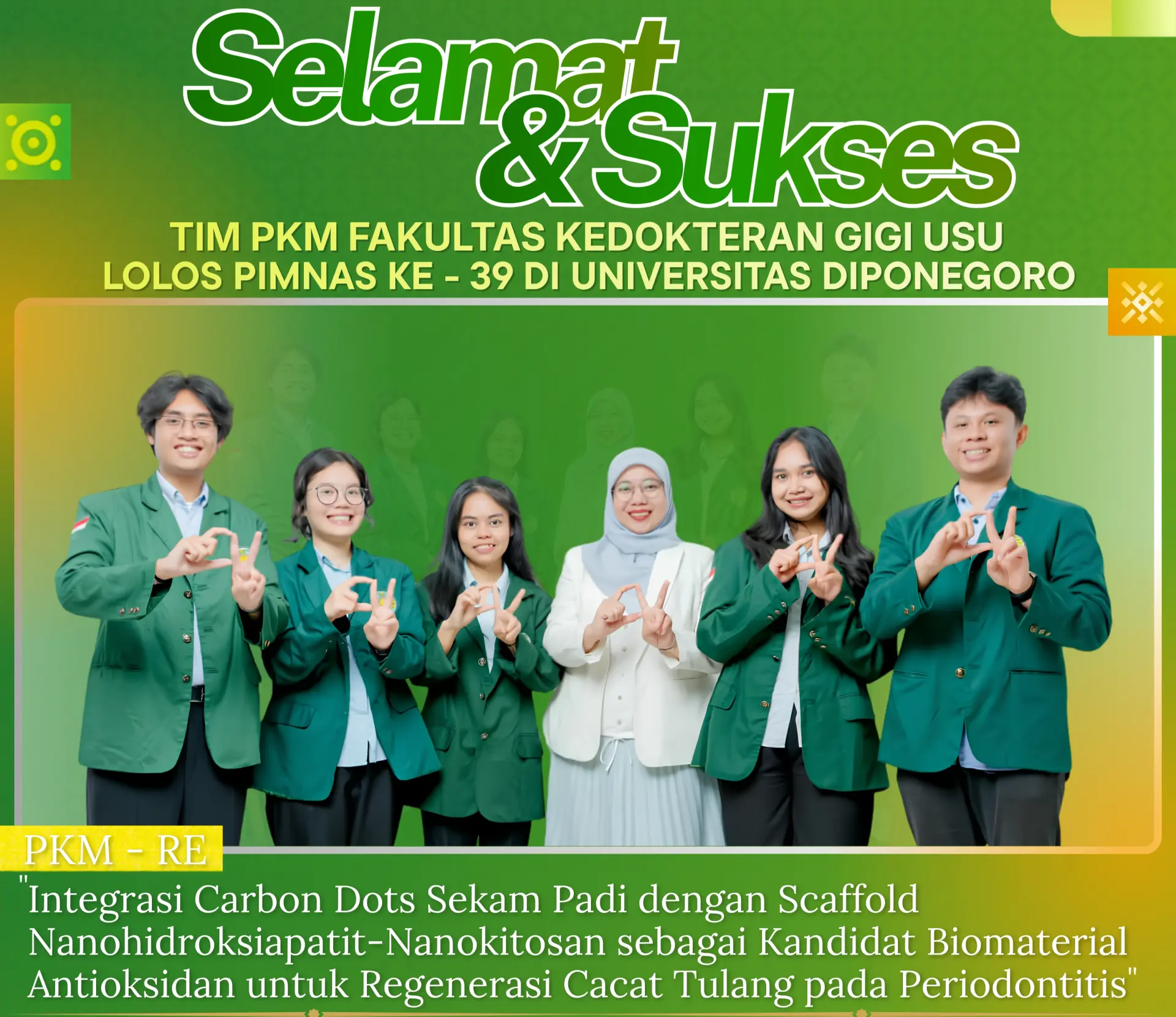
The use of PP plastic and clam shells in tooth models helps reduce two major types of waste in Indonesia. Initially, Polyshell Dent was part of a Student Creativity Program (PKM) research project conducted by the Odonto team under the leadership of Rhena Fitria Khairunnisa. The research proved the great potential of PP and calcium carbonate mixtures as raw materials for dental models.
From this research, the idea was further developed into a business under the PKM Entrepreneurship (PKM-K) scheme. Through this program, the Polyshell Dent Team was formed, led by M. Dwi Haikal with members Aurora Graciela, Ferdy Salim Lubis, Nathan Pratama, and Viola Pakpahan.
This team did not stop at the experimental stage but also moved toward production, distribution, and marketing strategies. Their clear target: to provide strong, affordable, and eco-friendly dental models for faculties of dentistry across Indonesia.
Laboratory tests support Polyshell Dent’s advantages. The addition of calcium carbonate to PP plastic has been proven to enhance the material’s mechanical properties through nucleation processes. This aligns with the findings of Budiyantoro et al. (2018).
Furthermore, research by Khairunnisa (2024) showed that tooth models made from PP and calcium carbonate mixtures are stronger than factory-made resin models. Meanwhile, Chai (2024) revealed that this material can decompose in soil in a relatively short period, approximately 25 days.
The presence of Polyshell Dent brings broad benefits:
For education, students can practice at lower costs without compromising quality.
For the environment, the product helps reduce plastic and clam shell waste.
For the economy, it paves the way for student-led businesses embracing the circular economy concept.
More than just a product, Polyshell Dent exemplifies how science can synergize with social and environmental awareness. This innovation can also inspire the development of other waste-based products, such as laboratory teaching aids or eco-friendly polymer-based educational components.
“We want to prove that student innovation can make a real impact, not only in academia but also for the environment and society at large,” said M. Dwi Haikal, leader of the Polyshell Dent Team.
Meanwhile, other team members, Aurora Graciela, Ferdy Salim Lubis, Nathan Pratama, and Viola Pakpahan, agreed that Polyshell Dent is not merely a temporary project but a sustainable business. They emphasized the importance of ongoing production and support from various stakeholders to bring this product to mass markets.
Polyshell Dent proves that problems can be turned into opportunities. From plastic and clam shell waste once deemed worthless, an innovative product was born — beneficial for education, friendly to the environment, and with strong economic potential.
This article is part of the 2025 PKM-K USU publication activities, supervised by Drg. Kholidina Imanda Harahap, M.DSc. Follow the innovation journey of Polyshell Dent through its official Instagram account: @polyshelldent.pkmkusu.
With creativity, scientific research, and entrepreneurial spirit, Polyshell Dent deserves to be called one of the most inspiring breakthroughs from the academic world for Indonesia.
FKG Social Networks
Find out more about the Faculty of Dentistry of Universitas Sumatera Utara.